 We originally started playing with Frisbies®.
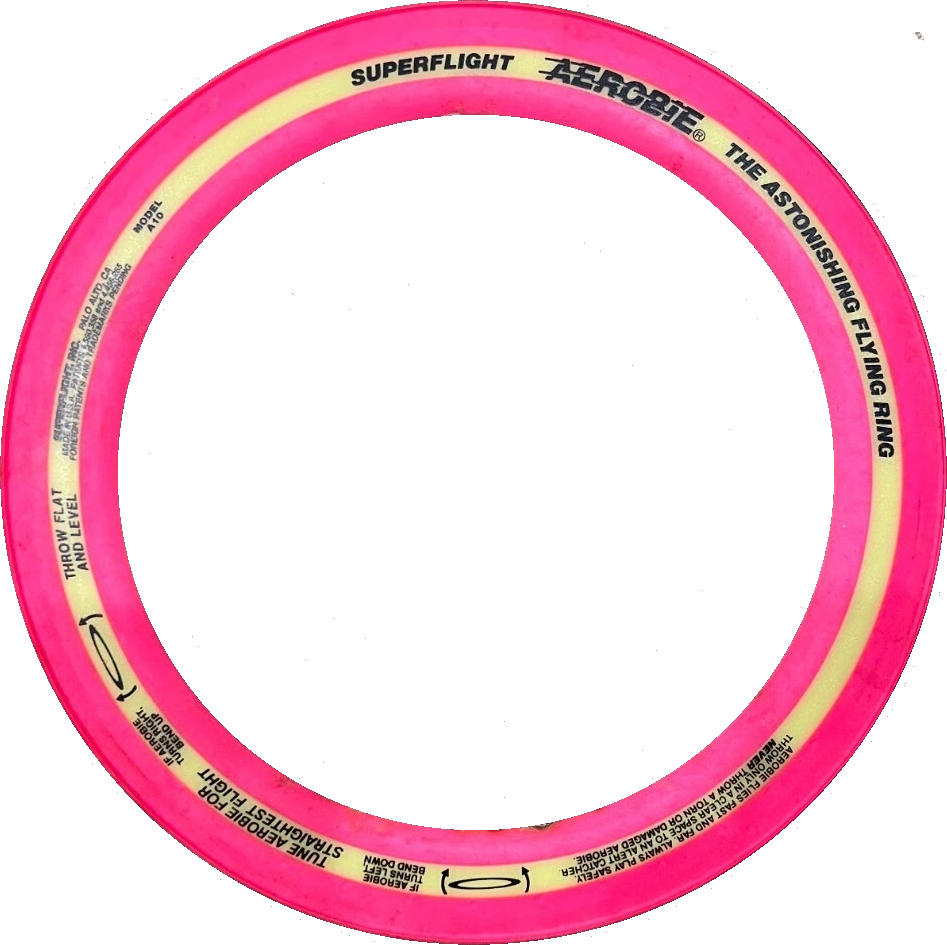
On one outing, Jerry showed up with a ring called an Aerobie®.
These rings were designed by Stanford Engineering Professor Alan Adler, and they flew quite far with much less throwing effort.
They also required much more finnesse to keep them from ending up "in France".
We originally started playing with Frisbies®.
On one outing, Jerry showed up with a ring called an Aerobie®.
These rings were designed by Stanford Engineering Professor Alan Adler, and they flew quite far with much less throwing effort.
They also required much more finnesse to keep them from ending up "in France".
BARN RUN MANIA
Welcome to the Official Home of the:
World Razor Golf Association
Our group is comprised of friends and neighbors who enjoy the outdoors.
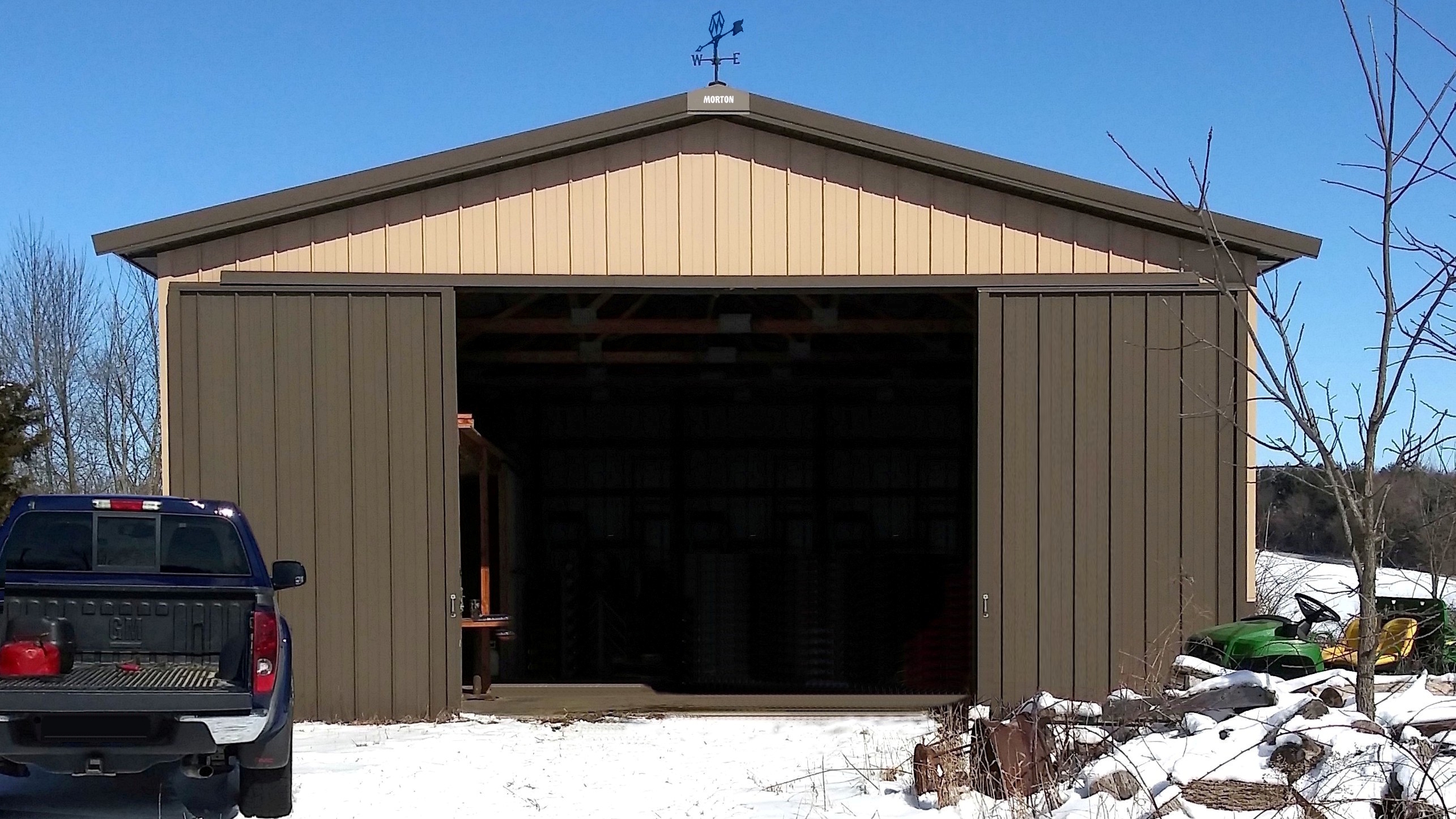
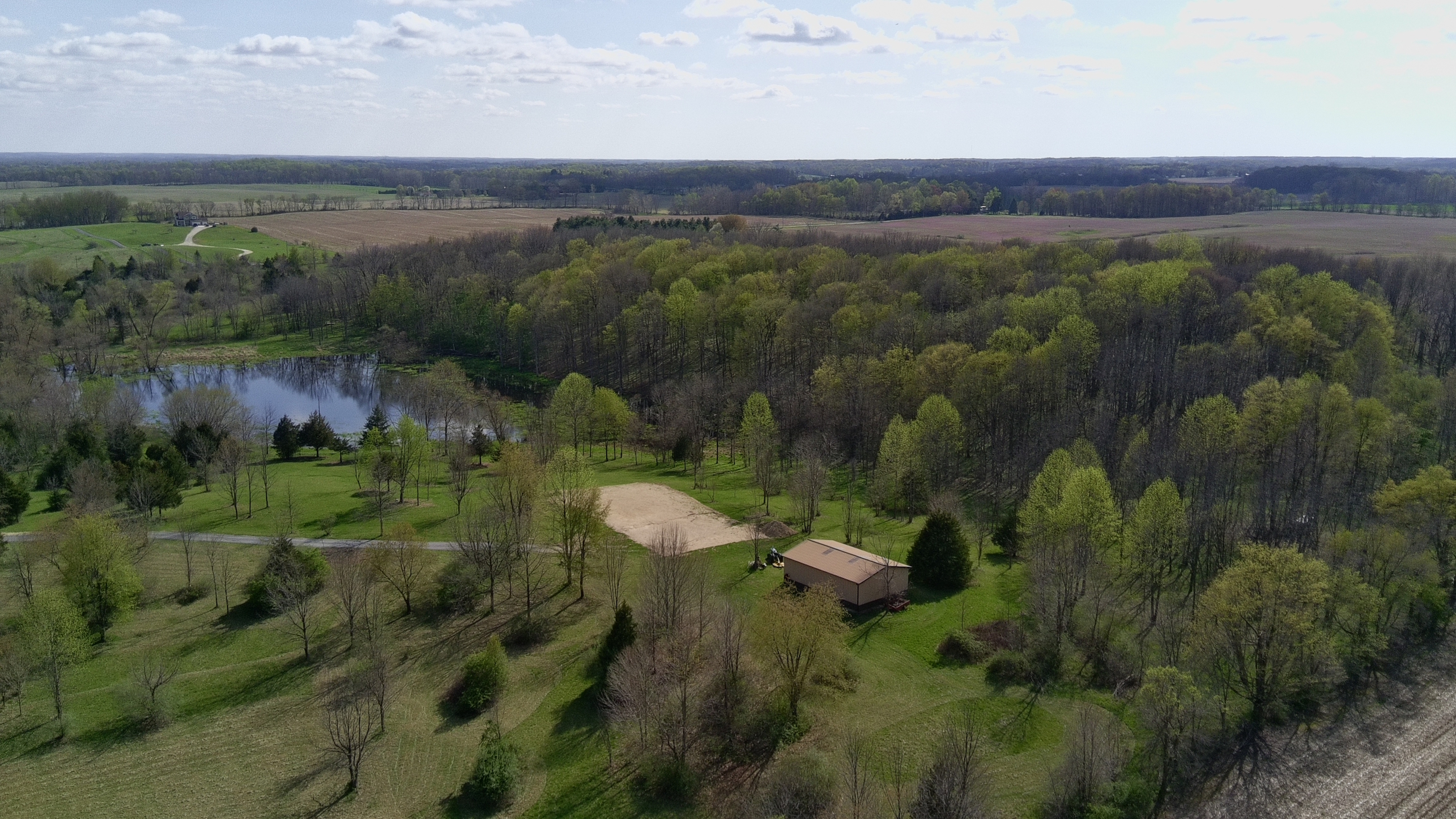
We gather several times every year at PAC LAND in Whitley County.
A typical outing can have anywhere between 6 to 14 people depending on everyone's schedule.
The term BARN RUN is derived from the pole barn that is the main structure on a 58 acre plot of land with 18 acres of woods.
The whole purpose is to have fun in the great outdoors with friends.
Typically, runs are held in the Spring, Fall and Winter.
We tried doing a couple of Summer runs, but we soon discovered that the mosquitoes like their meat seasoned with DEET.
The property doesn't have electricty or running water to ruin the back to nature sceme of things.
In the Winter, the overnight temperatures have dipped into the low single digits, which can test the metal of any man.
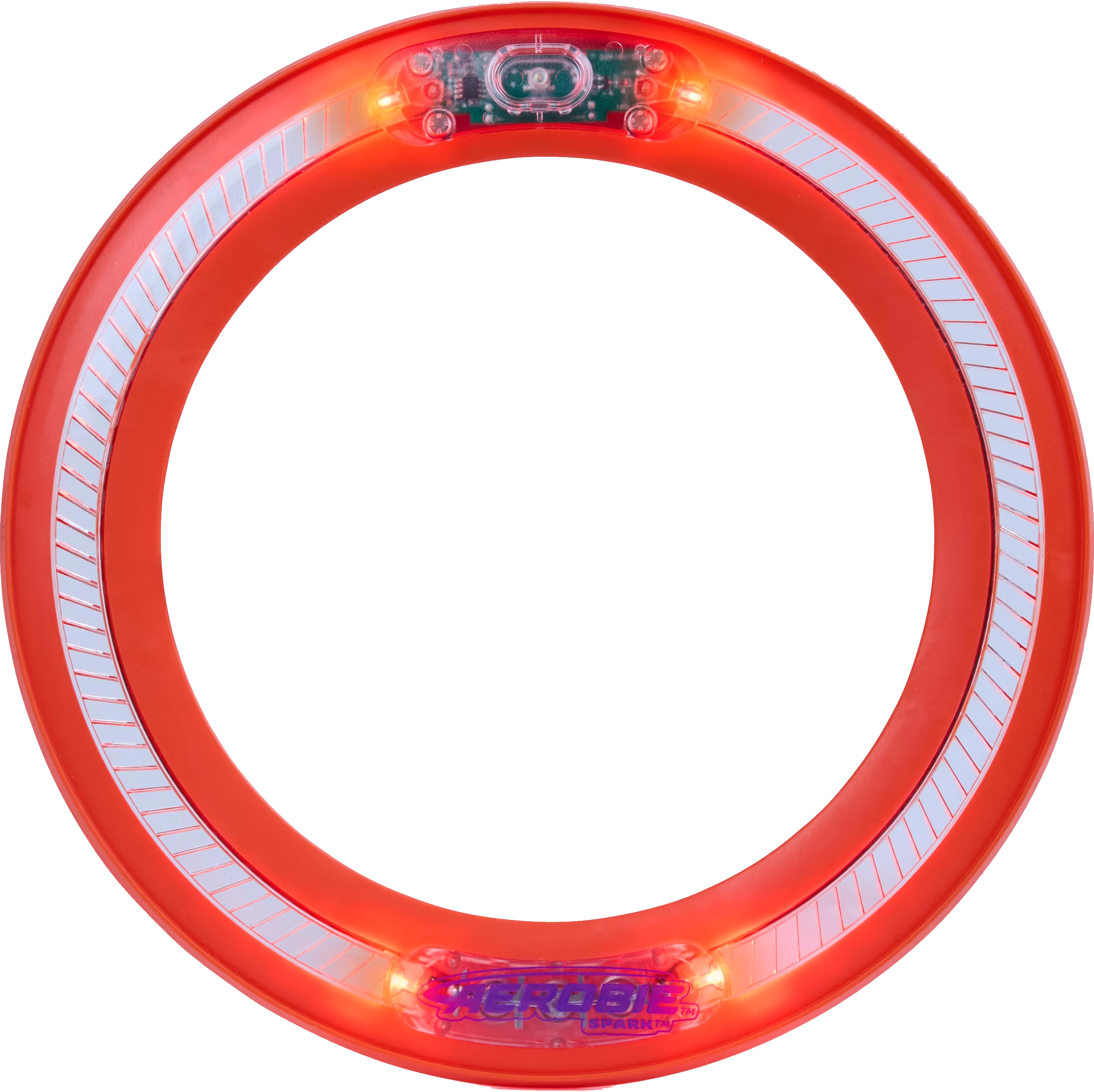
We always thought that there should be a way to play golf after nightfall.
We tried glow in the dark discs, but they didn't keep their luminescence very long.
Apparently, we weren't the only ones with this problem, because LED illuminated discs became more common.
Aerobie® now makes a lighted flying ring called Spark™.


- Lag for Partners - Pick a Target approx. 80 ft. away. Everyone tries to hit the target. The closest to the hole and the farthest away are partners, the 2nd closest and the 2nd farthest are parthers, etc.
-
Pick a Hole - Everyone gets a turn picking a hole.
EXAMPLES:
• The Post (Traditional 1st Hole).
• The Outhouse Door (Traditional 2nd Hole).
• A tree with a unique feature.
• A bush or a tree standing by itself. - Tee Off - Each player on each team makes their tee shot. Every player gets to test their skill (or luck) at making the best tee shot.
- Next Shots - Each team determines which player's shot is the best. All players on their team take their next shot from that location. The team farthest away from the hole shoots 1st.
- Par - Par is determined by the team(s) that reaches the hole with the fewest throws.
- Cards - Each team that scores a par gets to draw a card from a standard deck of cards (This eliminates arguing over who has the best running score). If all teams make par, no cards are awarded.
- Determining the Winner - The winner of the round is determined by the team that has the best Poker Hand with the cards they drew
-
Penalties - A penalty stroke is given if all throws for a team are in a penalty situation.
EXAMPLES:
• Crossing the fence or leaving the property.
• Hanging in a tree that has to be retrieved by "Artificial Means".
• Stepping out of the Tee Box.
• Violating any other rule established prior to the start of the hole.
• Any other situation that arises can be assessed a penalty by a majority vote (All ties are broken by the Land Owner).
Image
of

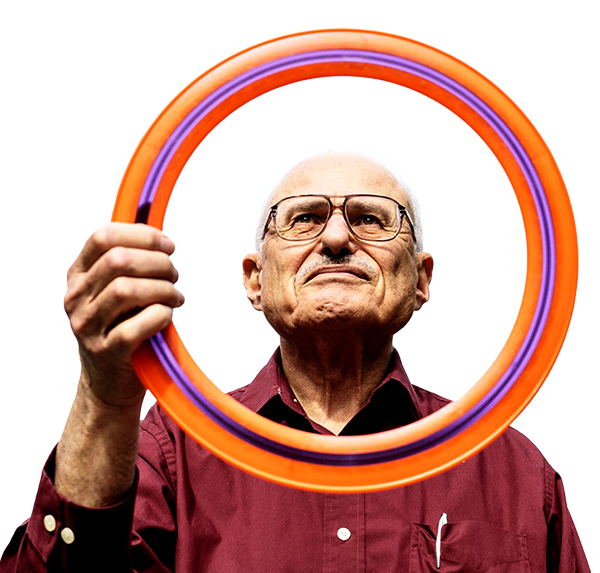
Aerobie’s founder, Dr. Alan Adler, was a man in pursuit of performance. In the 1970s, the Stanford Engineering professor noticed the shortcomings of popular flying discs of the day. Adler set out to make something better.
After eight long years of research and development, he had done it. His invention, the Pro Ring, broke the world record for the farthest thrown object. Today’s version soars over 1333 feet!
Adler didn’t stop there, however. He founded Aerobie in 1984 and over the years re-engineered, improved and invented numerous other flying rings and discs. Every item he created vastly outperformed any other on the market.
Source: https://aerobie.com



This website has multiple active elements
that will produce a popup window when your
mouse is positioned over them. Enjoy exploring.
that will produce a popup window when your
mouse is positioned over them. Enjoy exploring.